
Accounts & briefs
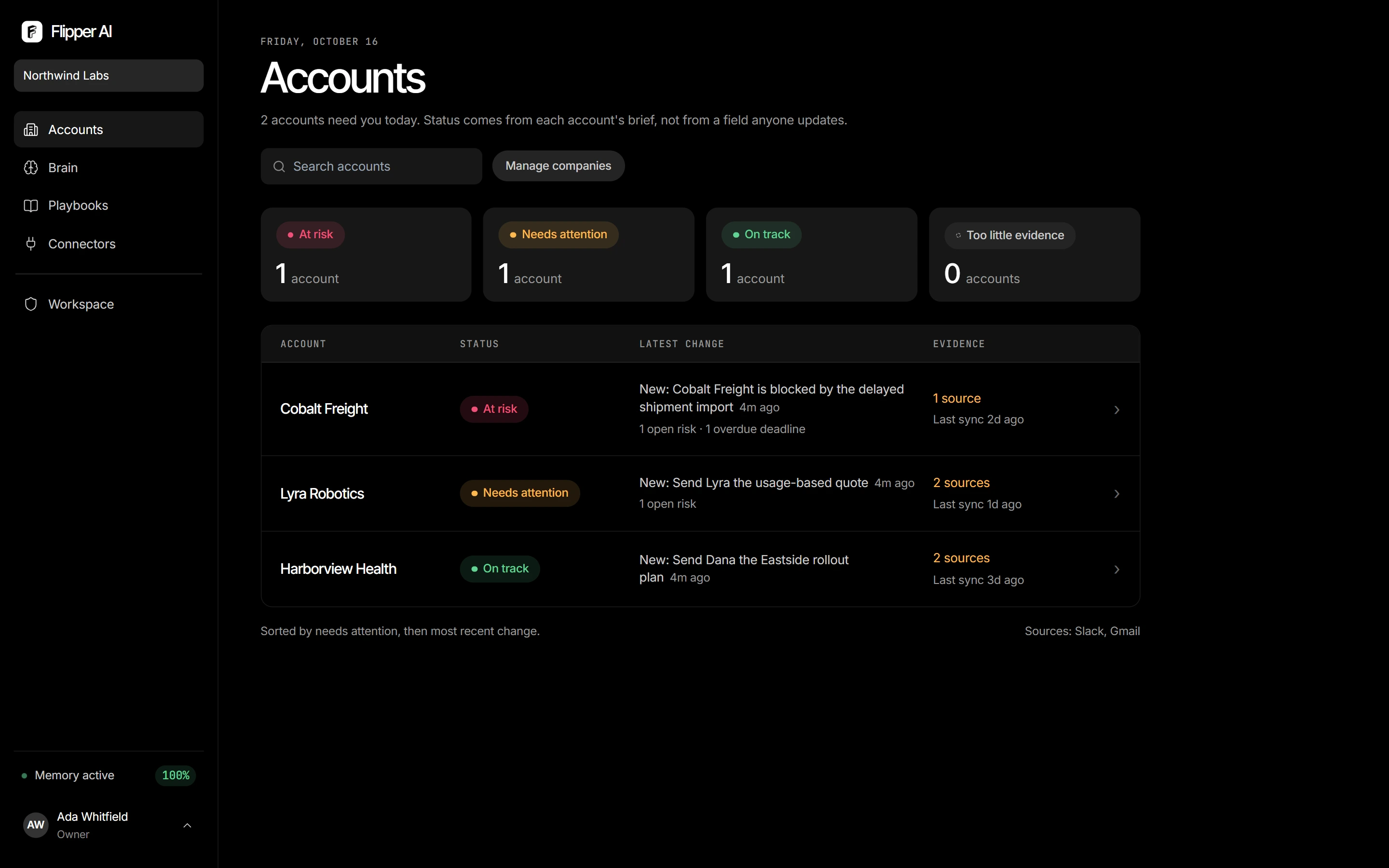
Accounts is where Flipper AI opens. It lists every company you marked as a customer, says which ones need you today, and gives each one a brief where every line shows the source it came from.
The accounts list
Each account's status is worked out from its own brief, not from a field anyone keeps up to date:
Accounts that need you come first, then the most recently changed. Each row shows the latest change and how many sources stand behind the brief. Owners and admins add and remove customers from Manage companies, where the companies Flipper AI found in your sources wait to be marked.
Reading a brief
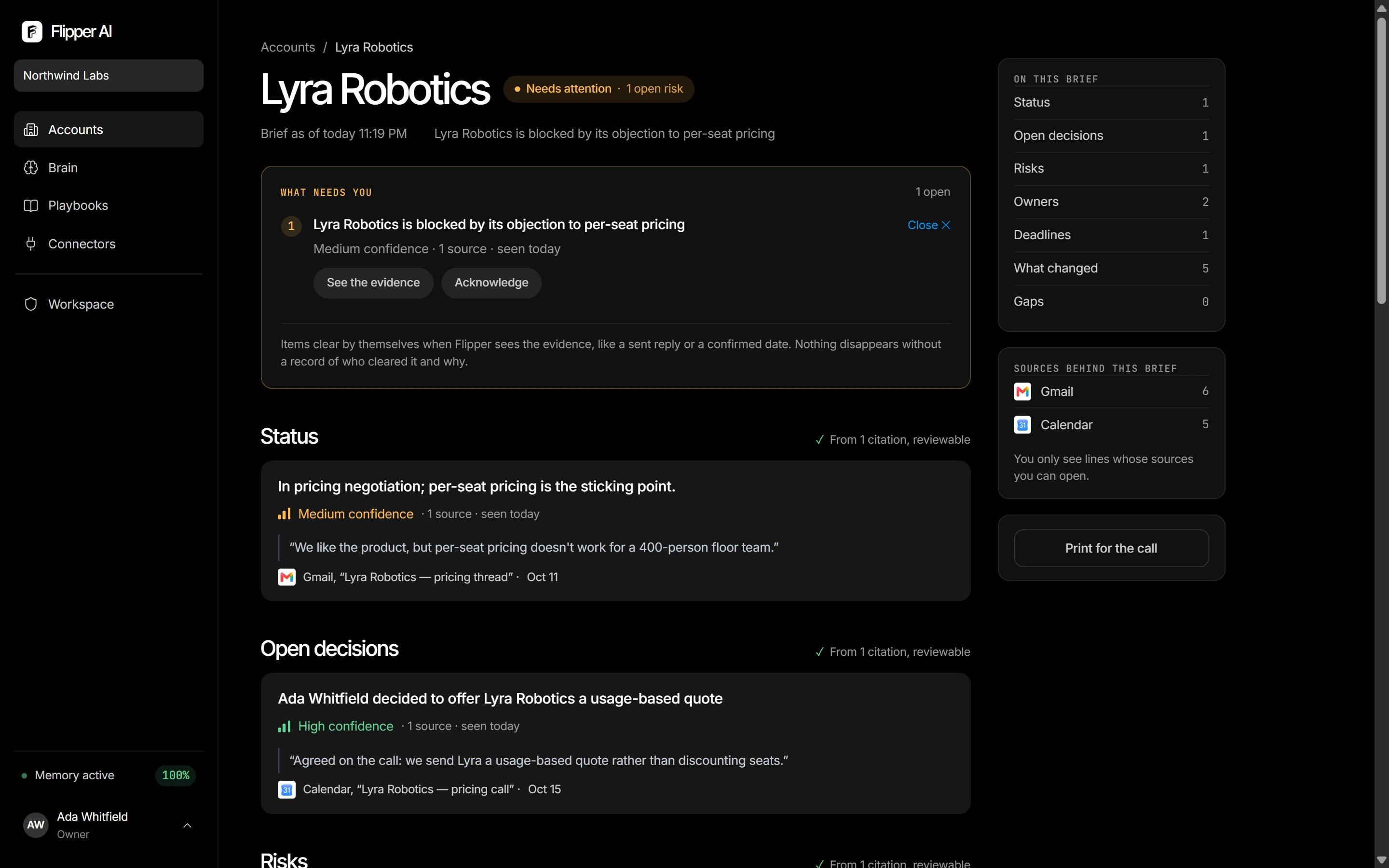
A brief has six sections: Status, Open decisions, Risks, Owners, Deadlines and What changed. Lines show their confidence, how many sources agree, when they were last seen, and who said them, where and when.
Show source expands a Slack line to the message it came from. Lines from Gmail, Notion, Drive and other linked sources show the quoted passage, when there is one, with a link to the original.
When two sources disagree, the line says so and names the other value. Resolve it under What needs you: both sides get the same button, and whichever you confirm is recorded with your name and the time.
A section with nothing sourced says so instead of guessing, and an open decision idle for 14 days or more is marked.
What needs you
Up to three items the brief can back, most urgent first: disagreements, overdue deadlines, open risks and idle decisions. An item clears when you confirm it, when new evidence settles it (with that evidence linked), or when you acknowledge it. Cleared items stay until the next day, then move to the account's history.
Gaps
Every brief ends with what it has not seen: sections with too little evidence, lines held back because they are too weak to state or rest only on sources you can't open, and lines that also rest on sources you can't see. Missing evidence is always named, never left blank.
Taking it into a call
Print for the call prints a one-page call sheet: the status and why, what to raise before the call, then each section in call order with every line keeping its source.